
Paperwork
Invoices are written by hand, with a note on top to pass them to accounting. The week's revenue is known only at the end of the month.
The invoice
Mousse x12, lemon tart x10, totals added up by hand, and a sticky note: pass it on to accounting.
Every line is counted
Each line of the invoice goes straight into the week's revenue.
The number, today
Revenue, orders and approvals are up to date now, not at the end of the month.
Before and after
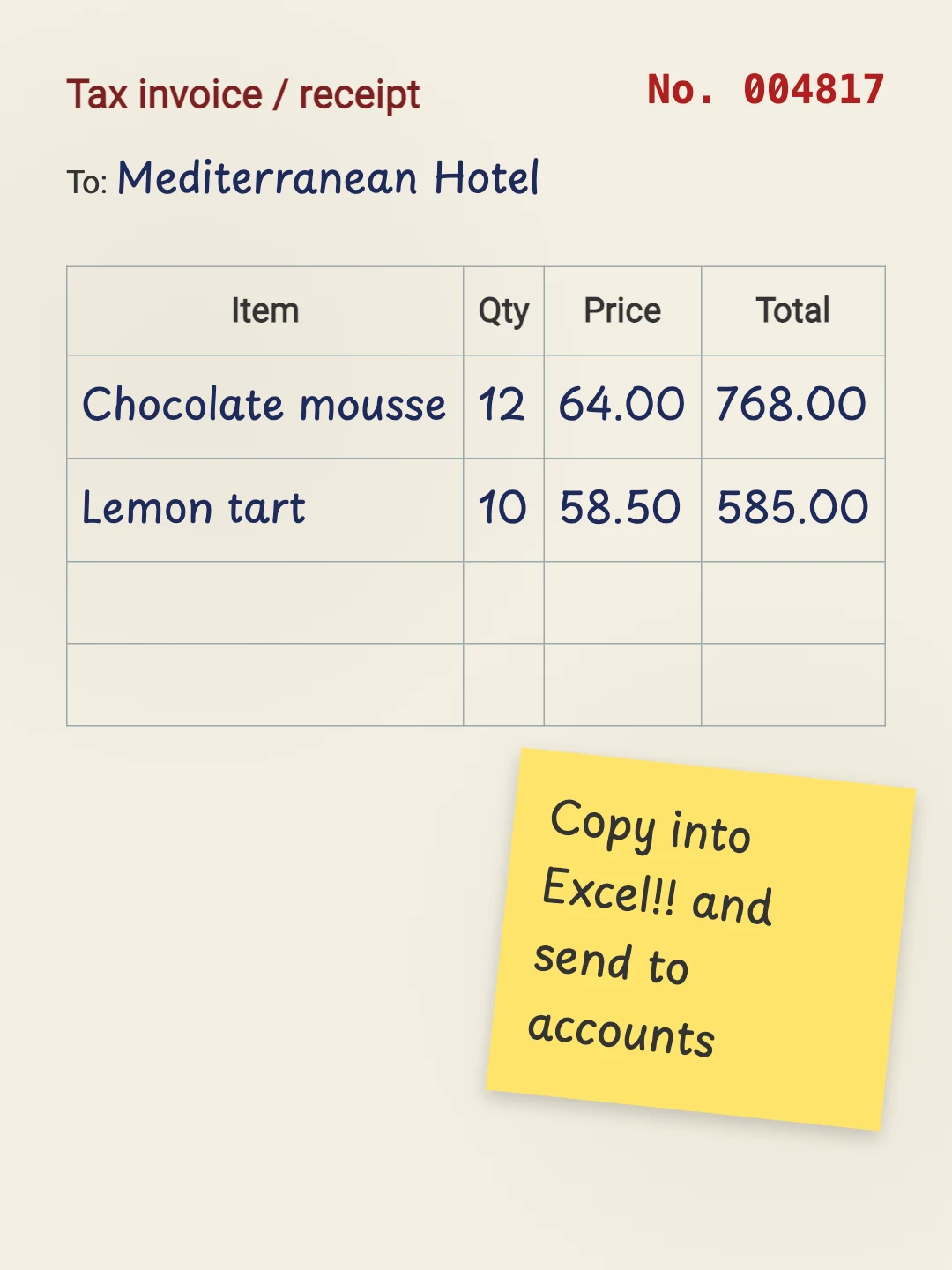
A handwritten invoice, waiting for accounting.
The week's revenue, on the system's dashboard.
The file and the system on this page are illustrations: the names and numbers are invented.
What it looks like
Real systems we built for clients, filmed from their own screens.
- Real screens, system in build
A farming and logistics company: one system instead of ten
Supplier invoices passed from hand to hand and work hours reported on WhatsApp. The film is built from real screenshots of the system we are building, taken from its development environment, with the business names hidden. The build continues phase by phase.
All of it, in 30 seconds
Included in every build
- Access
Built with real accounts
Every person who uses it gets their own login, set up before launch, not added later as an afterthought.
- Data
Built on your actual records
We connect it to your real data before launch, not a spreadsheet standing in as a placeholder.
- Support
One team, after launch too
The people who built it are the people you call when something breaks.
One call. Real scope in 48 hours.
Fifteen minutes, no sales deck. We tell you honestly if this is a fit.